Showing posts with label stolen antiquities. Show all posts

Wednesday, January 6, 2016

2015's Questionable Claims on ISIS and Syrian Antiquities: To Hopes for More Accuracy and Less Hype in 2016

Knowledgeable cultural property observers have been frustrated that questionable claims about Syria, ISIS and antiquities trade continue to be actively promoted as part of the archaeological lobby's campaign in support of H.R. 1493/S. 1887,  problematic legislation that purports to address protecting cultural property in times of war and civil strife.

In honor of the New Year, CPO counts down the top five (5) dubious claims made in 2015 in support of this legislation that would create a new State Department coordination and enforcement bureaucracy and place what amounts to permanent import restrictions on Syrian cultural goods.

Hopefully, questions about the accuracy of these claims will also lead to questions about the wisdom of  the Senate passing H.R. 1493/S. 1887 in its current form.  While this legislation was no doubt introduced with the best of intentions, it suffers because its sponsors failed to consult with all stakeholders before its introduction and have relied on incomplete, misleading or false information to justify its approach to the issue of cultural heritage preservation.

5. The Claim:  Trade data helps prove there has been an upsurge in stolen Syrian antiquities on the market.

The Source:  "Cultural Heritage Lawyer" Rick St. Hilaire and "Red Arch" Cultural Heritage Law Policy Research" have heavily promoted this idea on St. Hilaire's blog.  See most recently, Rick St. Hilaire, "Antiques from Syria: U.S. Cultural Property Import Stats Raise Suspicion," Cultural Heritage Lawyer Blog (December 29, 2015), available at http://culturalheritagelawyer.blogspot.com/2015/12/antiques-from-syria-us-cultural.html
 (last visited January 6, 2016).

The Reality:  Mr. St. Hilaire and his blog are associated with the archaeological lobby and its anti-trade and anti-collecting views.  As such, his interpretation of trade data should be viewed as that of an advocate for a position and not that of an unbiased researcher. With regard to his work, at the outset, there appears to be a serious misconception about the nature of the figures themselves.  St. Hilaire at least implies the figures reflect the values for artifacts exported from Syria in 2014 rather than a “country of origin” or “country of manufacture” of Syria and exported from elsewhere to the United States.  In fact, due to massive confusion in the trade and a lack of guidance from U.S. and foreign Customs, it is likely that the figures include values for both artifacts manufactured in Syria (perhaps thousands of years ago) and exported to the U.S. from elsewhere along with artifacts directly exported from Syria itself.  Thus, artifacts that were manufactured in Syria but have been out of Syria for decades are likely included (and indeed may represent the bulk of the material that has been imported.)  In any event, the values cited are modest (particularly compared to wild claims for the values of looted Syrian antiquities (see Claim No. 2 below)), and it would be interesting to compare them with figures for antiquities imports with a country of origin of Syria over time. 

4.  The Claim:  There must be storehouses full of valuable stolen Syrian antiquities.

The Source:  In 2002 and 2005, Swiss police raided warehouses that were used to house antiquities illicitly excavated in Italy and Greece over the past decades.   See David Gill, "Warehouses, Antiquities and Basel," Looting Matters Blog (November 7, 2008), available at http://lootingmatters.blogspot.com/2008/11/warehouses-antiquities-and-basel.html  (last visited January 6, 2016).   Of course, Switzerland is an exceptionally stable country that at the time was also known for its strong privacy laws.  What better a place to store valuable antiquities?

The Reality:  Though warehouses full of illicitly excavated antiquities were found in Switzerland, is it also likely that similar storehouses also exist in unstable Middle Eastern countries?  One would not necessarily think so, but the archaeological lobby has nonetheless promoted the idea. Why?  After the Second Gulf War, there were also claims that material looted from archaeological sites in Iraq would be reaching the market in quantity.  When this never materialized, the archaeological lobby then explained away the issue by claiming that the material was being stockpiled.  See Guy Gugliata, "Looted Iraqi Relics Slow to Surface," The Washington Post (November 8, 2005) available at https://www.globalpolicy.org/component/content/article/167/35577.html (last visited January 6, 2016).  Now, given the dearth of fresh Syrian material on the market, the same claim is again being used to explain away suspicions that efforts to loot archaeological sites (as evidenced by what appear to be holes in the ground in satellite photography) may not be anywhere near as successful as has been maintained.  (Apparently, no one has seriously (or at least publicly) considered the possibility that many of these holes were "dry" or at least some of these "looter's holes" were actually "fox holes" dug for military purposes.)

But what of the recent seizure from an ISIS financier? On May 15, 2015, U.S. Special Operations personnel removed a cache of hundreds of artifacts from the home of ISIS Financier Abu Sayyaf.  According to the State Department, "The cache represents significant primary evidence of looting at archaeological sites in Syria and Iraq, theft from regional museums, and the stockpiling of these spoils for likely sale on the international market." See  "ISIL Leaders Loot," U.S. State Department Cultural Heritage Center Website (undated), available at http://eca.state.gov/cultural-heritage-center/iraq-cultural-heritage-initiative/isil-leaders-loot (last visited January 5, 2016).  So far, this is the only storehouse full of "valuable" ISIS loot that has come to light.  However, an experienced dealer who looked at images of the coins found in the group valued them at perhaps $40,000 retail and $8,000 wholesale.  Indeed, the cache looked more like the modest stock of a small dealer in Middle Eastern antiquities than a storehouse for a fabulous cache of valuable Syrian antiquities.

3.  The Claim:  Only ISIS is benefiting from sales of illicit antiquities.  

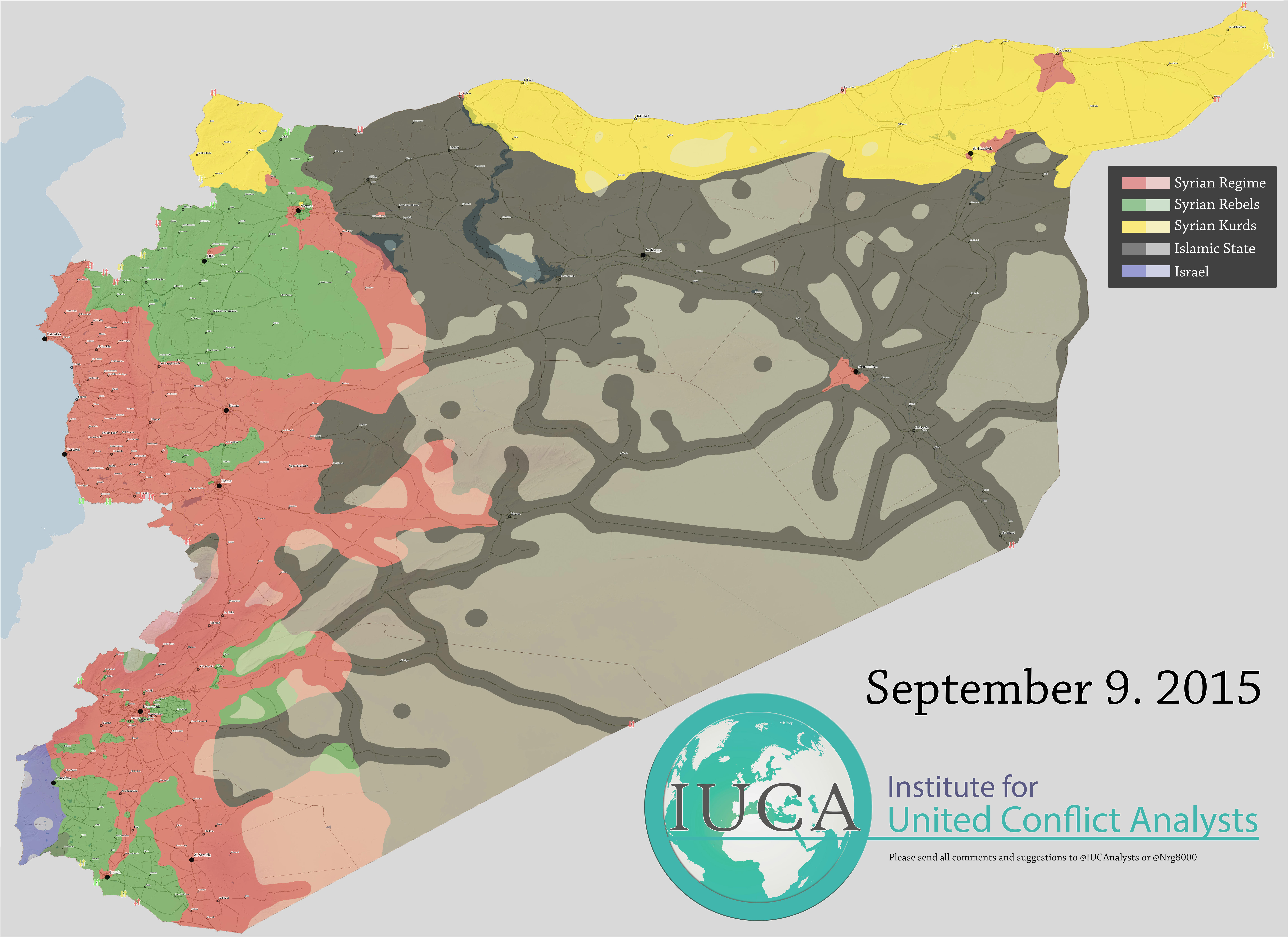
The Sources:  Back in 2014, Secretary of State Kerry highlighted the looting and destruction of cultural  sites in Syria  at an event at the Metropolitan Museum of Art in New York.  See Secretary of State John Kerry, Remarks at Threats to Cultural Heritage in Iraq and Syria Event (September 22, 2014), available at  http://www.state.gov/secretary/remarks/2014/09/231992.htm (last visited January 5, 2016).  Kerry evidently illustrated his talk with satellite imagery showing severe damage to Apamea, an important classical site in Syria.  CBS News and other news outlets then ascribed the damage at Apamea to ISIS even though Apamea appears to have been in government hands since the beginning of the Civil War.  It is unclear whether the archaeological lobby purposefully perpetuated this deception, but it is clear that CBS and other news sources have relied exclusively on State Department and archaeological lobby sources for their reporting.  See "The Perils of Limited Sourcing," Cultural Property Observer Blog (September 9, 2015), available at

The Reality:  A Dartmouth College study has confirmed that all participants in the Syrian civil war have taken part in looting Syrian archaeological sites. See "Dartmouth Led Study Shows ISIS Not Only Culprit in War Related Looting in Syria," Dartmouth Press Release (October 21, 2015), available at http://www.dartmouth.edu/press-releases/war-related-looting102115.html (last visited January 6, 2016).  As the press release states, "One of the most well-known incidents of looting occurred at Apamea, a massive Roman city in western Syria. The satellite images indicate that looting began in the start of 2012, after Syrian forces invaded the area, and continued during the Syrian occupation of the site through at least the fall of 2013. However, the most extreme phase of looting was conducted in the government-administered portion of the site with privately held fields remaining untouched until several months later when looting holes made by heavy machinery encroached into nearby areas on a systematic block by block basis with Syrian soldiers only 200 meters away."  Id.

2.  The Claim:  ISIS has made $10 s of millions or $100 s of millions from stolen antiquities.

The Sources:  The “tens of millions” figure ultimately derives from an erroneous claim that ISIS had stolen $36 million in antiquities from one on area in Syria alone.   See Heather Pringle, “ISIS Cashing in on Looted Antiquities to Fuel Iraq Insurgency,” National Geographic, June 27, 2014, available at http://news.nationalgeographic.com/news/2014/06/140626-isis-insurgents-syria-iraq-looting-antiquities-archaeology/ (last visited January 6, 2016).  The report was later found to refer to money made from all types of looting in the al-Nabuk region of Syria, not only the looting of archaeological material.  (See “New Documents Prove ISIS Heavily Involved in Antiquities Trafficking,’ Gates of Nineveh Blog (September 30, 2015), available at https://gatesofnineveh.wordpress.com/2015/09/30/new-documents-prove-isis-heavily-involved-in-antiquities-trafficking/) (last visited January 6, 2016). 

The $100 million figure has been cited in a "Fact Sheet" to justify support for H.R. 1493/S.1887, but it appears even less grounded in fact.  See "Fact Sheet: Deny ISIS Funding & Save Syria's Antiquities,"  United States House of Representatives, Committee on Foreign Affairs, Elliot L. Engel, Democrats (October 28, 2015) available at https://democrats-foreignaffairs.house.gov/news/press-releases/fact-sheet-deny-isis-funding-save-syrias-antiquities-hr1493s1887 (last visited January 6, 2016).  Instead, it traces back to an unsupported claim made by Iraq’s UN Ambassador at a time the U.N. was considering a resolution condemning the terrorist group’s destruction and looting of cultural sites in Iraq.  See Rick Gladstone, “U.N. Resolves to Combat Plundering of Antiquities by ISIS,” The New York Times, May 28, 2015, available at http://www.nytimes.com/2015/05/29/world/middleeast/un-resolves-to-combat-plundering-of-antiquities-by-isis.html?_r=0  (last visited January  6, 2016).   

The Reality:  Provable amounts that ISIS has made from antiquities sales are far smaller, ranging from several hundreds of thousands of dollars to several millions.  See Derek Fincham, "Leaked Records Hint at How Much ISIS Makes on Antiquities," Illicit Cultural Property Blog, http://illicitculturalproperty.com/leaked-records-hint-at-how-much-isis-makes-on-antiquities/#more-10623    (last visited January 4, 2016).  See also Kate Fitz Gibbon, "Debunking the ISIS Antiquities Funding Myth,' Committee for Cultural Policy Blog (December 6, 2015), available at http://committeeforculturalpolicy.org/debunking-the-isis-antiquities-funding-myth/ (last vistited January 6, 2016).  These figures are a drop in the bucket compared to ISIS estimated take of at least $1 billion.

1. The Claim:  Import restrictions will "save" Syrian cultural property.

The Sources:  The archaeological lobby claims that embargoes on cultural goods will "save" Syrian cultural property, act as to disincentive looting, and damage terrorist financing.  See Erin Thompson, "Restrict Imports of Antiquities from Syria to Cut Down on Looting," The New York Times (January 21, 2015), available at http://www.nytimes.com/roomfordebate/2014/10/08/protecting-syrias-heritage/restrict-imports-of-antiquities-from-syria-to-cut-down-on-looting (last visited January 6, 2016) and Heather Lee, "Heritage Crisis in Syria; a Call for a Moratorium on the Antiquities Trade, Saving Antiquities for Everyone Blog (September 3, 2014) available at http://savingantiquities.org/heritage-crisis-syria-call-temporary-moratorium-trade/ (last visited January 6, 2016).

The Reality:  As applied by U.S. Customs, import restrictions are grossly over broad because they relate to where artifacts are made instead of where and when they were found.  Under the Convention on Cultural Property Implementation Act ("CPIA"), the law governing import restrictions on cultural goods, the Government bears the initial burden to establish: (1) the item is of a type that appears on the designated list; (2) the item was first discovered within and subject to the export control of the country for which restrictions were granted; and (3) that it was illegally removed from the country for which import restrictions were granted after the applicable date.  (Under the CPIA, this is the date restrictions were imposed; here the date proposed under H.R. 1403/S.1887 is March 15, 2011.)  Thus, under H.R. 1493/S.1887, the Government should be required to establish that (1) the item is of a type that appears on the designated list of Syrian artifacts that will be created; (2) the item was “first discovered within” Syria and was subject to Syrian export control; and (3) the item was illegally removed from Syria after March 15, 2011.

Unfortunately, history shows that the State Department and U.S. Customs put expedience first.  Despite the CPIA’s plain meaning, the applicable regulation, 12 C.F.R. § 12.104 (a), ignores these requirements.  See Ancient Coin Collectors Guild v. U.S. Customs and Border Protection, 801 F. Supp. 2d 383, 407 n. 25 (D. Md. 2011) (“Congress only authorized the imposition of import restrictions on objects that were ‘first discovered within, and [are] subject to the export control by the State Party.’ Under the regulations, that requirement seems to apply only to the importation of a ‘fragment or part’ of an object of archaeological or ethnological interest.  This appears to have been an oversight in the drafting, or codification, of the original regulations in 1985, and has persisted in the C.F.R. ever since.”), aff’d,  698 F.3d 171 (4th Cir. 2012).  Accordingly, collectors are rightly concerned that following standard operating procedure,  the Government will argue that it need only establish the first element of its burden, i.e. that the object is “of archaeological interest” with a “country of origin” or manufacture of “Syria.”  For coins (one of the most common ancient artifacts), the practical result will thus be to give CBP license to “scoop up” all historical coins minted in Syria over the centuries even though such coins circulated far from Syria in ancient times as items of commerce and in more modern times as collectibles.  This, of course, will do little or nothing to "save" Syrian cultural property, disincentivize looting, and damage terrorist financing, but will do much to harm the legitimate trade in ancient art and the cultural understanding it brings.  

And what will happen to any antiquities and coins that are swept up in the dragnet?  The CPIA assumes that they will be repatriated to Syria, something not changed in H.R. 1493/S. 1887.  This, of course, raises pertinent questions.  Can artifacts be saved if they are returned to a war zone?  And is it morally justifiable to give them to the Assad regime, which has done its own share of looting and which has also intentionally destroyed cultural sites with its barrel bombs and artillery?

Tuesday, December 29, 2015

Israel Requires On-Line Inventories

After losing a court challenge, Israeli antiquities dealers will be required to establish on-line inventories that will allow Israeli authorities to better track purchases, sales and exports.

In theory at least, this sounds reasonable, but CPO wonders whether the process will be a nightmare in practice, particularly for small, inexpensive items like oil lamps and coins.

And if this is such a great idea, why not require archaeologists and museums operating in Israel to establish on-line inventories as well?  Such on-line inventories would help deter insider theft and perhaps provide information that will be helpful to scholars.

Friday, December 18, 2015

Witch Hunt to Follow?

The UN Security Council has voted to require member states to pursue ISIS funding sources. While this is well and good, it is unfortunate that once again a bogus $100 million figure for ISIS antiquities sales is apparently being used to justify the measure.  Now, we can only hope that there won't be a witch hunt in order to try to prove the claim that ISIS is dealing vast quantities of antiquities in Europe and the United States.

Monday, September 14, 2015

Poor Security in Scotland's Museums

Poor security in Scotland's Museums has evidently encouraged thieves or corrupt insiders to steal some valuable coins.  It's unclear of the coins had been previously photographed.  If so, it will make them much easier to recover.

Wednesday, September 9, 2015

The Perils of Limited Sourcing

CBS News' "investigative report" on looting by ISIS -- like others on the topic-- also suffers from over-reliance upon State Department funded archaeologists and lawmen with their own agendas.

How so?  Once again, there is the misleading suggestion that any artifacts looted from Apamea-- here a valuable mosaic-- benefit ISIS when the site is 35 KM North West of the Regime controlled Muharadah and nearby territory appears to be in the hands of other (non ISIS) rebel groups.

There is also the question of the value of the antiquities that have been looted-- if anything, the steep drop in the asking price for the mosaic from $200,000 to $60,000 suggests that looted material may be more difficult to sell than is suggested.  In any case, it would be interesting to learn whether the mosaics have been published anywhere previously.  Do they come from a known location or were they previously unknown?

And despite dark claims by New York Assistant District Attorney Matthew Bogdanos that "artifacts from countries under ISIS control" are available in the US, it's unclear whether he's referring to artifacts that are the product of recent looting or the exact same sort of "Middle Eastern material" that has been on the market for decades.

In any event, CBS News "has also learned" that there are multiple criminal investigations underway, so presumably we may know more soon.


Saturday, July 4, 2015

Tabloid Journalism Alert: An Archaeologist Patrols the Market

The Guardian Newspaper reports on what an UCL archaeologist saw when he walked around antiquities stores in London.  And what did he find?  Well, the same kinds of small antiquities from the Middle East that have been sold there for generations.

Yet, now in some academic circles they are called "blood antiquities."  This, of course, provides the perfect excuse for the usual suspects to declaim on the supposed evils of the antiquities trade and try to justify a major change in our great Anglo-American legal traditions that presumes innocence rather than guilt-- something to think about on this Independence Day.

There is even an image of that that infamous coin struck in Apamea millenia ago.   Though the Guardian quoted archaeo-blogger Sam Hardy, it evidently did not bother to check Hardy's blog that raised serious questions about whether the coin is as advertised out of a war zone.

More tabloid journalism at its worst.

Wednesday, December 3, 2014

Playing Gotcha

The Greek Reporter has a short  profile of  Dr. Christos Tsirogiannis, a Glasgow researcher, who uses police files procured "under the table" from the Greek authorities to play "gotcha" with auction houses and collectors.  CPO believes such behavior should not be celebrated but condemned.  The fair thing for Greek authorities to do would have been to share the materials with major auction houses so it can be reviewed as part of their due diligence process.  Instead, the Greeks (and presumably their Italian counterparts) use Tsirogiannis and his go-to blogger, David Gill, to publicly humiliate auction houses and prominent collectors with privileged information.  This gives the Greek and Italian cultural bureaucracies an easy "win" when the embarrassed collector and auction house surrender the artifact, and Tsirogiannis and Gill, two otherwise obscure academics, get some notoriety.   Perhaps all this helps divert attention away from the gross underfunding, bureaucratic incompetence and corruption that bedevils Greece's and Italy's poor stewardship of their own cultural patrimony, but it doesn't make it right.

Sunday, July 20, 2014

You Can't Take it With You, and Your Descendants Can't Keep It Either

If tomb robbing is wrong, isn't it all the worse when the State then adds insult to injury by taking the contents that have been recovered from the decedent's family?

Yet, where is the outrage from the archaeological community?  Or, do they actually support State over family ownership of grave goods?

Sunday, June 15, 2014

New Information Further Undercuts Egyptian Claims to SLAM Property

As CPO understands it, the basis for the Egyptian claim to the Ka Nefer Nefer Mummy Mask was that it must have been stolen from Egyptian stores.  But this claim is based on the further assumption that Egypt never allowed such materials to be gifted or sold.  However, the truthfulness of this assumption was undercut with the admission that Egyptian officials gifted antiquities in the past.  Moreover, it's CPO's understanding that the Egyptian Museum itself also sold antiquities at least until the 1960's.  Alan Safani  of the IADAA has also confirmed that antiquities sales were allowed in Egypt in the past, but he has also characterized the provision of official paperwork or export certificates as "haphazard."  In CPO's view, all this raises the distinct possibility that the Saint Louis Art Museum may also have been able to defeat the Egyptian claim on the merits.

Lawyer's Committee to the Rescue?

The Egyptian Military Dictatorship has indicated that it won't give up on its efforts to take the Ka Nefer Nefer Mask away from the Saint Louis Art Museum.  If, as it appears, yet more legal action is contemplated, perhaps the "Lawyer's Committee for Cultural Heritage Preservation" or "Cultural Heritage Lawyer" Rick St. Hilaire will take on General Sissi's case "pro bono."  At least,  more U.S. taxpayer dollars won't be involved.

Thursday, June 12, 2014

SLAMMED AGAIN

The US Court of Appeals for the Eighth Circuit has affirmed a decision dismissing the government's forfeiture complaint against the Ka Nefer Nefer mummy mask.  The ruling was made on procedural grounds relating a government motion to amend its forfeiture complaint following a dismissal order, but a win is a win for SLAM, the Saint Louis Art Museum.

Thursday, April 3, 2014

Panel on U.S. Federal Power and the Repatriation of Cultural Artifacts

The  New York City Bar Association, 42 W. 44th Street, NY, NY, will be hosting a panel on the repatriation of cultural artifacts today @ 2 PM.  It's free, and despite the suggestion otherwise on the NY City Bar's website, it's not really necessary to pre-register on-line.

If you read this blog, you will be interested in what experts have to say about this topic.  More details are available here.   Please note due to a last minute family issue, Sharon Levin will not be able to attend, but the US Government will be ably represented by one of her colleagues, Alexander Wilson, who was her co-counsel in the recent forfeiture case involving Sotheby's and a Khmer statue.

Wednesday, April 2, 2014

Is That It?

Archaeo-blogger David Gill is making much of the fact that two lots have been withdrawn from auction based on the work of a confederate who combed through the April catalogues at Bonham's and Christie's.

Is that it?  Bonham's has 496 lots in their two sales and Christie's has 199.  Of course there are many lots with multiple objects but after their effort it appears at most only 0.288% of the objects appear problematical.  Even then, appearance of the photos in the archive don't necessarily prove looting.    But even assuming it does, that's still one-quarter of one percent of this particular market.  

So what do these numbers really tell  us?   That an epidemic looting continues in Italy?  Of course not.  That auctions are filled with looted material?  Of course not.  Or that Italy long ago won its war on looting and its time to rethink the need for its MOU with the US?  Most certainly.  

Friday, March 28, 2014

Thanks, But No Thanks

Deborah Lehr, the politically connected Chair of the Capitol Archaeological Institute (CAI), has spun her organization's narrative of what ails Egypt's cultural patrimony and what should be done about it on the Huffington Post website.

The heroes, of course, are archaeologists like Monica Hanna who is said to have single-handedly fought off armed looters raiding the Malawi Museum in Minya.  In contrast, the villains are shadowy  international "cultural racketeers" bent on stealing Egypt's antiquities and selling them to unscrupulous collectors abroad.

But Ms. Lehr is a very sophistocated woman who should know better.  Egypt's problems are of Egypt's own making.  The country has been effectively ruled by its military since the fall of its British-installed monarchy. The Arab Spring, which brought such great hope, quickly turned ugly.  There were free elections, but Egypt's first elected President from the Muslim Brotherhood quickly disappointed all those who hoped that Egypt would become the Arab World's first true democracy. Instead, what Egyptians got was the makings of an Islamic Dictatorship.  The military, using the cover of another popular uprising,  then reasserted itself and overthrew this freely elected leader.  Now, the country's highest ranking general has announced that he is taking off his uniform so he can become president.  Meanwhile, just like in bad old Egypt before the Arab Spring, hundreds of adherents of the deposed Muslim Brotherhood President have been condemned to death after show trials for rioting in none other than Minya, the site of the looted Malawi Museum.  None of these people appear to be shadowy international "cultural racketeers," but rather discontented supporters of their deposed President.  And what of the museum itself?  Though you would not know it from Ms. Lehr's opinion piece, some 800 of the 1,000 or so artifacts that were stolen have been recovered and returned to the museum.

And what of Ms. Lehr's prescriptions for this mess of Egypt's own making?  In brief, she assumes collectors, auction houses and the small businesses of the antiquities and numismatic trade will: (1) donate money to the Egyptian Cultural Bureaucracy through the CAI (despite widespread corruption in the country); (2) acquiesce to "emergency import restrictions" on Egyptian cultural artifacts that the AIA itself has admitted won't work and only hurt the legitimate trade in cultural artifacts of the sort widely collected here and abroad since the 19th c.; and (3) acquiesce in the convocation of a "Cultural Racketeering Summit" which would likely be used to justify a future "antique ivory" type ban in the transfer and sale of Egyptian antiquities.

Thanks, but no thanks.  While US Customs can and should interedict Egyptian cultural goods where there is some hard evidence they were recently stolen from Egyptian museums and archaeological sites, any "emergency" is entirely of Egypt's own making and American collectors, museums and the small businesses of the antiquities and numismatic trade should not be made to pay the price.

Monday, March 24, 2014

Be on the Lookout

There has been a large theft of coins from a family-owned dealership in Lyon, France.  A listing and pictures of the coins can be found here.

If you see any of the coins for sale or have any other information, contact: Michael Creusy

Website : http://www.numismeo.com/ http://www.numismeo.com/
List of stolen coins : http://www.numismeo.com/ http://www.numismeo.com/
Email : michael.creusy@live.com
Phone : +33 4 78 37 63 20
Address : 14 rue vaubecour, 69002 Lyon, France.

Monday, February 17, 2014

Which Office Do I Go To To Get My Reputation Back?

Federal prosecutors have dropped  all smuggling charges against Joe Lewis II, a well-known collector of Egyptian antiquities.   The much ballyhooed case against Lewis and two co-defendants never lived up to the initial hype, stoked by the U.S. Attorney's press office, the archaeological blogosphere and former Egyptian Antiquities Pharaoh Zahi Hawass (who at the time was desperately trying to keep his job).  And now,  with Lewis exonerated, he's the one who should be asking that famous question, "Which office do I go to to get my reputation back?"

Tuesday, February 4, 2014

Plea Deal Leaves Issues Unresolved

A NJ based coin dealer will forfeit ancient coins and cash as part of a plea deal related to federal tax charges.  Although the archaeological blogosphere will no doubt claim the plea deal supports the need for the recently completed MOU with Bulgaria, serious questions still remain whether the US should have entered into an agreement to restrict Americans from importing the exact same sorts of coins openly traded within Bulgaria itself and the rest of the EU.   In that regard, it's also interesting to note that at least based on this press report, federal authorities have also apparently backed away from any claims the coins to be forfeited were "stolen" under Bulgarian law, presumably for that exact same reason.  For federal courts to consider cultural artifacts to be stolen under Bulgarian law, the government would have had to show that Bulgarian law vested absolute title to such coins in the Bulgarian state and that this law was consistently applied at home.

Wednesday, January 8, 2014

Another Bataar Skull to Be Repatriated, but Was it "Stolen?"

The Feds have made another fossil dealer an offer he could not refuse--  give us your Tyrannosaurs Bataar Skull, plead guilty to smuggling, pay a fine and almost all will be forgiven.  The problem with all of this is that serious questions remain about claims that such fossils are "stolen" from Mongolia, i.e., does Mongolia have a law that vests absolute title of all such fossils in the Mongolian state that is actively enforced at home?

Sunday, November 17, 2013

Destroying Artifacts to Save Endangered Species-- Are There Any Parallels for Antiquities Collectors?

The US Fish and Wildlife Service has destroyed its large stockpiles of seized ivory claiming that the move will help save endangered elephants.   Does this move have any relevance for antiquities collectors?

Some in the archaeological community see direct parallels between endangered elephants and "endangered" artifacts, but the differences should be obvious.  Elephants are live beings; artifacts are not. Harvesting ivory kills elephants; removing artifacts from the ground may deprive them of "context," but it may also save them from deterioration and development. And is anyone seriously maintaining seized artifacts should be destroyed?  Let's hope not, though one wonders if repatriating them to underfunded cultural bureaucracies abroad pretty much guarantees they will be lost through neglect or worse as time goes on.

And what of the economics of the government's actions?  Some have suggested selling off ivory stocks would be far more effective in depressing prices and ultimately lessening demand.  Government spokesmen instead claim that such sales would instead stimulate demand and help others disguise poached ivory.

And is this of any relevance to antiquity collecting?  Probably not.  First, "post-1970" antiquities remain legal to own so I'm not sure how sales of seized antiquities would help disguise "poached" ones.  Second, underfunded cultural bureaucracies abroad could really use the money generated from such sales.  Finally, stimulating demand for antiquities may not be such a bad thing, particularly where it leads to further study and appreciation of the ancient cultures that made them.  So, despite any effort to link ivory to antiquities, any parallels in the  end seem quite limited.

Thursday, November 14, 2013

One Can't Assume...

that ancient coins without a provenance dating back to 1970 must ipso facto be a recent find.   While such an erroneous assumption has become an article of faith within the archaeological community, this story about a very important coin that was on display at the British Museum proves otherwise.